

【Cancer Cell】2025年9月刊论文导读
期刊介绍:
Cancer Cell创刊于2002年,由CELL PRESS出版商出版,收稿方向涵盖医学-肿瘤学全领域,在行业领域中学术影响力很大,属于TOP期刊,国际一流期刊。审议手稿的主要标准是研究是否在回答与自然发生的癌症有关的重要问题方面取得重大进展。影响因子指数48.8。

Sep 08, 2025 Volume 43 Issue 9p1593-1776
2025年9月,Cancer Cell共发表15篇文章,其中包括Commentary 1篇 ;Previews 4篇;Articles 9篇; Editorial Expression of Concern 1篇。
1. Gene context drift identifies drug targets to mitigate cancer treatment resistance
基因背景漂移揭示药物靶点,破解癌症治疗耐药难题
英国剑桥大学癌症研究所
Summary
Cancer treatment often fails because combinations of different therapies evoke complex resistance mechanisms that are hard to predict. We introduce REsistance through COntext DRift (RECODR): a computational pipeline that combines co-expression graph networks of single-cell RNA sequencing profiles with a graph-embedding approach to measure changes in gene co-expression context during cancer treatment. RECODR is based on the idea that gene co-expression context, rather than expression level alone, reveals important information about treatment resistance. Analysis of tumors treated in preclinical and clinical trials using RECODR unmasked resistance mechanisms–invisible to existing computational approaches– enabling the design of highly effective combination treatments for mice with choroid plexus carcinoma, and the prediction of potential new treatments for patients with medulloblastoma and triple-negative breast cancer. Thus, RECODR may unravel the complexity of cancer treatment resistance by detecting context-specific changes in gene interactions that determine the resistant phenotype.
摘要
癌症治疗常常失败,因为不同疗法的组合会引发复杂且难以预测的耐药机制。研究者提出了一种名为“通过上下文漂移揭示耐药性”(REsistance through COntext DRift, RECODR)的计算方法。该方法将单细胞RNA测序数据的共表达图网络与图嵌入技术相结合,用于衡量癌症治疗过程中基因共表达背景的变化。RECODR的核心理念是:基因共表达背景,而非单纯的表达水平,更能揭示与治疗耐药性相关的重要信息。通过对临床前和临床试验中治疗的肿瘤进行RECODR分析,揭示了一些现有计算方法无法识别的耐药机制,从而为小鼠脉络丛癌设计了高效的联合治疗方案,并预测了针对髓母细胞瘤和三阴性乳腺癌患者潜在的新疗法。因此,RECODR有望通过检测决定耐药表型的基因相互作用的上下文特异性变化,破解癌症治疗耐药性的复杂性。
2. Chemotherapy awakens dormant cancer cells in lung by inducing neutrophil extracellular traps
化疗通过诱导中性粒细胞胞外诱捕网唤醒肺部休眠癌细胞
中国科学院上海营养与健康研究所
Summary
Disseminated tumor cells (DTCs) can remain in a non-proliferative, dormant state for years in distant organs, but the exogenous causes triggering their reactivation and metastatic colonization are unclear. Here, we demonstrate that chemotherapeutic drugs, including doxorubicin and cisplatin, enhance proliferation and lung metastasis of dormant breast cancer cells. Using a recombinase-based dormancy tracing system, DormTracer, we confirm chemotherapy-induced reactivation of dormant DTCs leading to metastatic relapse. Mechanistically, chemotherapy induces fibroblast senescence, which promotes formation of neutrophil extracellular traps (NETs) through secreted proteins. NETs promote dormant DTC proliferation through extracellular matrix remodeling. Importantly, combining senolytic drugs, dasatinib and quercetin, with doxorubicin inhibits post-therapy DTC reactivation and suppresses metastatic relapse. This study provides direct evidence of dormancy awakening and reveals a mechanism underlying detrimental effect of chemotherapy on metastasis, highlighting potential strategies to improve cancer treatment.
摘要
播散性肿瘤细胞(DTC)可在远处器官中保持多年不增殖的休眠状态,但触发其再激活并转移性定植的外源性原因尚不清楚。该研究发现,多柔比星和顺铂等化疗药物能促进休眠乳腺癌细胞增殖并加剧肺转移。利用基于重组酶的休眠示踪系统 DormTracer,研究人员证实了化疗可诱导休眠 DTC 再激活,进而导致转移复发。其机制上是化疗诱导成纤维细胞衰老,后者通过分泌蛋白促进中性粒细胞胞外诱捕网(NET)形成;NET 经细胞外基质重塑驱动休眠 DTC 增殖。将衰老清除药物达沙替尼与槲皮素联合多柔比星使用,可抑制治疗后 DTC 再激活并阻止其转移复发。该研究直接证实了DTC休眠可被唤醒,并揭示化疗对转移不利效应的机制,为优化癌症治疗提供了潜在策略。
3. A stratification system for breast cancer based on basoluminal tumor cells and spatial tumor architecture
基于基底腔肿瘤细胞与空间肿瘤结构的乳腺癌分层系统
美国华盛顿大学医学部
Summary
Rapid recurrence is common in triple-negative breast cancer (TNBC). To better understand drivers of recurrence, we use imaging mass cytometry to characterize the tumor phenotype landscapes of 215 TNBC patients. We observe high intertumor heterogeneity with eleven tumor cell phenotypes, each of which dominates in an individual patient, and identify a tumor cell phenotype with reduced basoluminal lineage fidelity and stem-like traits that is correlated with rapid disease recurrence. Scoring of tumor-CD8+ T cell interactions identifies patients with inflamed tumors and high HLADR expression. We combine these features in multi-omics analyses of 8 cohorts with 3737 patients across all molecular subtypes to propose five prognostic breast cancer subtypes distinguished by tumor cytokeratin expression profiles and CD8+ T cell spatial patterns. This stratification scheme has direct clinical implications: inflamed tumors show good prognosis and high immunotherapy response rates, whereas patients dominated by basoluminal tumor cells have poor prognosis.
摘要
三阴性乳腺癌(TNBC)患者常出现快速复发的情况。为探究复发驱动因素,研究者采用成像质谱流式技术对215例TNBC患者的肿瘤表型景观进行解析。该研究发现存在11种高度异质性的肿瘤细胞表型,每种表型均在特定患者中占主导地位。其中一种具有基底腔谱系保真度下降和干细胞样特征的肿瘤细胞表型,与疾病快速复发密切相关。通过评估肿瘤-CD8+ T细胞相互作用,确定了具有肿瘤炎症特征和高HLADR表达的患者。基于对8个队列3737例涵盖所有分子亚型患者的多组学分析,研究人员整合这些特征提出了五种预后性乳腺癌亚型,这些亚型可通过肿瘤细胞角蛋白表达谱和CD8+T细胞空间分布模式进行区分。该分型方案具有直接临床意义:具有炎症特征的肿瘤预后良好且免疫治疗应答率高,而以基底腔肿瘤细胞为主导的患者预后较差。
4. Integrated single-cell and spatial transcriptomics uncover distinct cellular subtypes involved in neural invasion in pancreatic cancer
整合单细胞与空间转录组学揭示胰腺癌神经侵袭中不同细胞亚型的作用
深圳湾实验室癌症研究所
Summary
Nerves are integral to tumor biology, yet the peri- and intra-neural microenvironment and their roles in cancer-neural invasion (NI) remain underexplored. Here, we perform single-cell/single-nucleus RNA sequencing (sc/snRNA-seq) and spatial transcriptomics on 62 samples from 25 pancreatic ductal adenocarcinoma (PDAC) patients, mapping cellular composition, lineage dynamics, and spatial organization across varying NI statuses. Tertiary lymphoid structures are abundant in low-NI tumor tissues and co-localize with non-invaded nerves, while NLRP3+ macrophages and cancer-associated myofibroblasts surround invaded nerves in high-NI tissues. We identify a unique endoneurial NRP2+ fibroblast population and characterize three distinct Schwann cell subsets. TGFBI+ Schwann cells locate at the leading edge of NI, can be induced by transforming growth factor β (TGF-β) signaling, promote tumor cell migration, and correlate with poor survival. We also identify basal-like and neural-reactive malignant subpopulations with distinct morphologies and heightened NI potential. This landscape depicting tumor-associated nerves highlights critical cancer-immune-neural interactions in situ and enlightens treatment development targeting NI.
摘要
神经是肿瘤生物学不可或缺的组成部分,然而神经周围及神经内微环境在癌症神经侵袭(NI)中的作用仍缺乏深入探索。该研究对25例胰腺导管腺癌(PDAC)患者的62份样本进行单细胞/单核RNA测序(sc/snRNA-seq)及空间转录组学分析,系统描绘不同NI状态下细胞组成、谱系动态与空间组织图谱。研究发现三级淋巴结构在低NI肿瘤组织中富集,并与未受侵袭的神经共定位;而在高NI组织中,NLRP3+巨噬细胞和癌相关肌成纤维细胞聚集于受侵袭神经周围。研究人员鉴定出一群独特的神经内膜NRP2⁺成纤维细胞,并解析出三种不同的施万细胞亚群。其中,定位于NI前沿的TGFBI+ 施万细胞可被转化生长因子β(TGF-β)信号通路诱导,具有促进肿瘤细胞迁移的能力,且与患者不良预后相关。此外,还发现基底样及神经反应性两种恶性细胞亚群,其具有独特的形态特征和具更强NI潜能。该肿瘤相关神经全景图揭示了关键的癌-免疫-神经原位互作,为靶向NI的治疗策略提供新思路。
5. Macropinocytosis maintains CAF subtype identity under metabolic stress in pancreatic cancer
巨胞饮作用在胰腺癌代谢应激下维持CAF亚型特征
美国桑福德·伯纳姆·普雷比斯医学发现研究所
Summary
Pancreatic ductal adenocarcinoma (PDAC) tumors are glutamine deficient, and both tumor cells and cancer-associated fibroblasts (CAFs) rely on this amino acid to maintain fitness and induce macropinocytosis as an adaptive response. CAFs play a critical role in sculpting the tumor microenvironment, yet how adaptations to metabolic stress impact the stromal architecture remains elusive. In this study, we find that macropinocytosis sustains the myCAF phenotype under glutamine limitation by preventing inflammatory reprogramming. Our data demonstrate that metabolic stress induces an intrinsic inflammatory CAF (iCAF) program through MEK-ERK signaling. We find that blocking macropinocytosis in vivo promotes myCAF-to-iCAF transitions, remodeling the tumor stroma. Importantly, stromal remodeling driven by macropinocytosis inhibition—including iCAF enrichment, collagen reduction, immune cell infiltration, and vascular expansion—sensitizes PDAC tumors to immunotherapy and chemotherapy. Our findings reveal that inhibiting macropinocytosis promotes an inflammatory, less fibrotic tumor microenvironment that can be leveraged to improve therapeutic responses in PDAC.
摘要
胰腺导管腺癌(PDAC)处于谷氨酰胺匮乏状态;无论是肿瘤细胞还是癌相关成纤维细胞(CAFs),都依赖这一氨基酸维持活性,并启动巨胞饮作用作为适应性反应。CAFs 在塑造肿瘤微环境中至关重要,但其应对代谢应激的策略如何影响间质结构仍不清楚。该研究发现,在谷氨酰胺受限条件下,巨胞饮作用通过阻止炎性重编程来维持肌成纤维细胞样CAF(myCAF)表型。代谢应激通过 MEK-ERK 信号轴诱发细胞自主性炎性 CAF(iCAF)程序。体内阻断巨胞饮作用可驱动 myCAF 向 iCAF 转变,进而重塑肿瘤间质。重要的是,巨胞饮抑制所诱导的间质重塑(iCAF 富集、胶原减少、免疫细胞浸润及血管扩张)可显著增强 PDAC 对免疫治疗和化疗的敏感性。综上,抑制巨胞饮作用可促进炎性、低纤维化的肿瘤微环境,为提升 PDAC 治疗效果提供新的干预策略。
6. Adoptively transferred Th17 cells cooperate with host B cells to achieve durable tumor immunity
过继转移的Th17细胞与宿主B细胞协同实现持久的肿瘤免疫
美国埃默里大学温希普癌症研究所外科
Summary
CD4+ T helper cells play an important role in adoptive T cell therapy (ACT) success, but it remains unclear which subset is most therapeutic and how they eliminate tumors. We find that tumor-specific Th17 cells eradicate melanoma more effectively than other CD4+ subsets and protect against distant metastases by unique orchestration of host immunity. Donor Th17 cells require host B cells —but not T cells— for tumor regression. Th17 cells induce B cell proliferation, activation, and differentiation, while B cells augment Th17 cell polyfunctionality by enhancing IL-21 production. Th17 and B cells colocalize in lymphoid tissues, where Th17 cells induce germinal centers and tumor-reactive antibodies via IL-21 production and CD40L costimulation. Furthermore, these tumor-specific antibodies provide partial protection against tumor challenge. Herein, we reveal that adoptively transferred Th17 cells cooperate with B cells to drive sustained immunity, demonstrating a role for endogenous B cell responses in effective CD4+ ACT.
摘要
CD4+ T辅助细胞在过继性 T 细胞治疗(ACT)中发挥关键作用,但何种亚群最具治疗潜力及其清除肿瘤的具体机制尚不清楚。该研究发现,肿瘤特异性Th17细胞比其他CD4+ 亚群能更有效地清除黑色素瘤,并通过独特的宿主免疫调控机制抑制远端转移。供体来源的Th17细胞介导的肿瘤消退需要宿主B细胞参与,而非T细胞。Th17 细胞可诱导 B 细胞增殖、活化与分化,同时B 细胞通过增强 IL-21 分泌提升 Th17 细胞的多功能性。Th17 与 B 细胞在淋巴组织中共定位,Th17细胞通过产生IL-21及CD40L共刺激信号诱导生发中心形成和肿瘤反应性抗体产生。这些肿瘤特异性抗体对肿瘤再攻击提供部分保护。该研究揭示了过继转移的Th17细胞通过与B细胞协同驱动持续免疫,证实了内源性B细胞应答在CD4+ ACT疗法中的重要作用。
7. Alistipes finegoldii augments the efficacy of immunotherapy against solid tumors
Alistipes finegoldii增强实体瘤免疫治疗效果
中山大学肿瘤防治中心
Summary
The emergence of immunotherapy has revolutionized cancer therapy. However, immunotherapeutic resistance remains a major obstacle for broader clinical application. Recent studies highlight that gut microbiota enhances immunotherapy by modulating anti-tumor immunity. In our investigation, we identify that Alistipes finegoldii (A. finegoldii) is associated with superior immunotherapy efficacy across multiple cohorts. Subsequent in vitro and in vivo experiments reveal that A. finegoldii enhances CD8+ T cell chemotaxis via the CXCL16-CXCR6 axis, enhancing immunotherapy efficacy. Mechanistically, a lipoprotein derived from A. finegoldii (LIPOAF) activates the nuclear factor kappa B (NF-κB) signaling pathway to augment CXCL16 expression in CCR7+ conventional dendritic cells through binding with the Toll-like receptor 2. Released CXCL16 subsequently facilitates the recruitment of CXCR6+CD8+ T cells into the tumor microenvironment, effectively curbing tumor growth. Our findings suggest a promising strategy for treating solid tumors by combining A. finegoldii with immunotherapy.
摘要
免疫疗法的出现革新了癌症治疗格局,然而免疫治疗耐药性仍是制约其更广泛临床应用的主要障碍。近期研究提示肠道菌群可通过调控抗肿瘤免疫增强免疫治疗疗效。该研究在多队列中发现,Alistipes finegoldii(A. finegoldii)与免疫治疗更佳应答显著相关。体内外实验进一步证实,A. finegoldii 通过 CXCL16-CXCR6 轴增强 CD8⁺ T 细胞趋化功能,从而提升免疫治疗效果。机制上,A. finegoldii 来源的脂蛋白 LIPOAF 与 Toll 样受体2结合,激活核因子 κB(NF-κB)信号通路,使 CCR7⁺ 经典树突状细胞上调 CXCL16 表达;释放的 CXCL16 进而招募 CXCR6⁺CD8⁺ T 细胞进入肿瘤微环境,有效抑制肿瘤生长。该研究为 A. finegoldii 与免疫治疗联用治疗实体瘤提供了前景广阔的新策略。
8. Integrative analysis of lung adenocarcinoma across diverse ethnicities and exposures
多民族、多暴露因素背景下的肺腺癌整合分析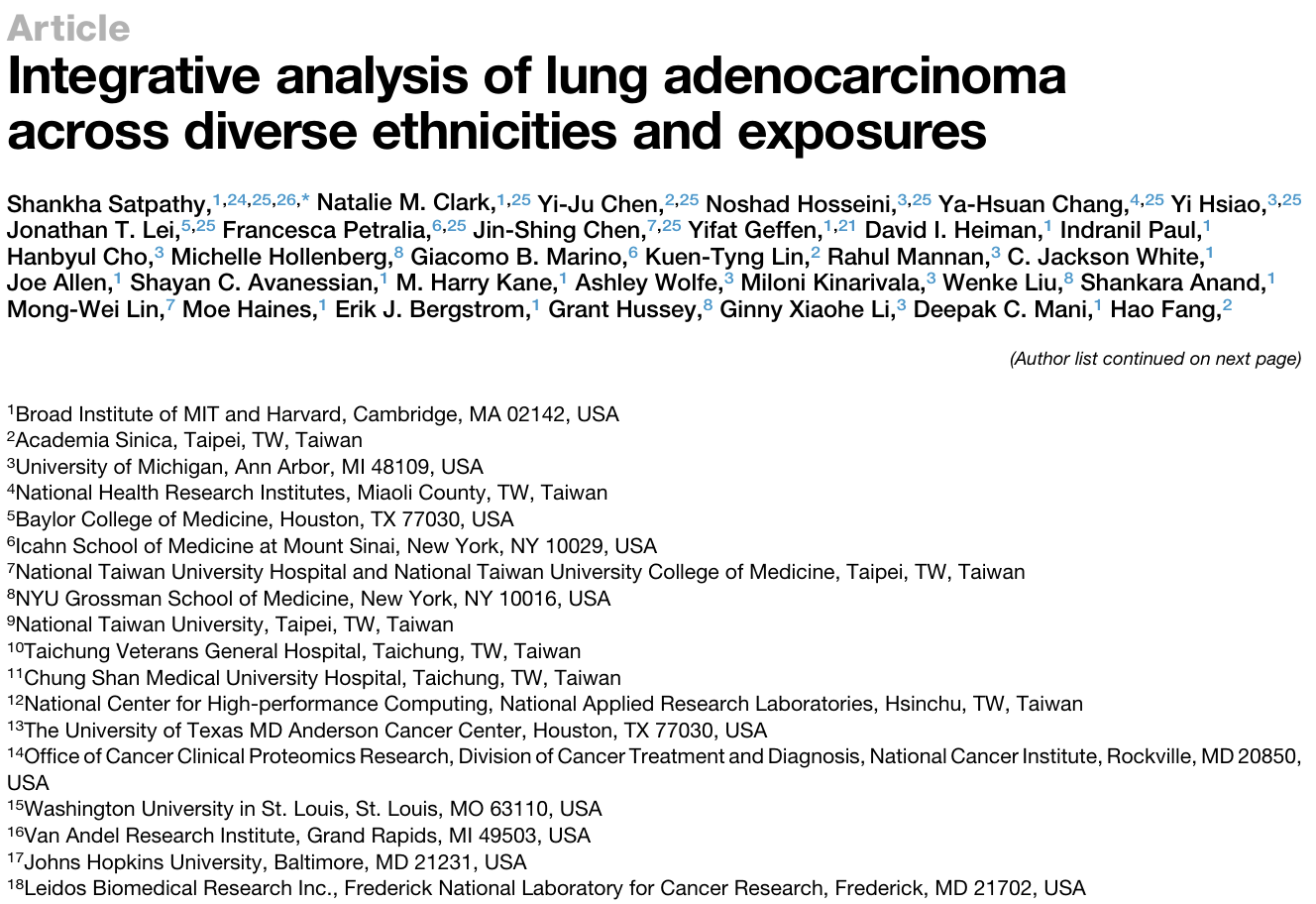
麻省理工学院与哈佛大学博德研究所
Summary
Lung adenocarcinomas (LUAD) are a pressing global health problem with enduring lethality and rapidly shifting epidemiology. Proteogenomic studies integrating proteomics and post-translational modifications with genomics can identify clinical strata and oncogenic mechanisms, but have been underpowered to examine effects of ethnicity, smoking and environmental exposures, or sex on this heterogeneous disease. This comprehensive proteogenomic analysis of LUAD tumors and matched normal adjacent tissues from 406 patients across diverse geographic and demographic backgrounds explores the impact of understudied driver mutations, prognostic role of chromosomal instability, patterns of immune signaling, differential and sex-specific effects of endogenous mutagens and environmental carcinogens, and pathobiology of early-stage tumors with “late-like” characteristics. Candidate protein biomarkers are proposed for unstable tumors with highly fragmented genomes and for carcinogen exposures, and a LUAD subtype-specific atlas of therapeutic vulnerabilities is presented. These observations and the associated data resource advance the objective of precision management strategies for this devastating disease.
摘要
肺腺癌(LUAD)是全球健康的重大威胁,致死率居高不下且流行病学特征急剧变化。蛋白基因组学研究将蛋白质组学、翻译后修饰与基因组学整合,可识别临床分型与致癌机制,但对种族、吸烟、环境暴露或性别等影响因素的研究力度不足。该研究对来自不同地域和人口背景的406例LUAD患者肿瘤及配对正常邻近组织进行全面的蛋白基因组学分析,深入探讨了被忽视驱动突变的影响、染色体不稳定的预后价值、免疫信号模式、内源性诱变剂与环境致癌物的差异及性别特异性效应,以及具有“晚期样”特征的早期肿瘤的病理生物学。该研究提出了适用于基因组高度不稳定的肿瘤及致癌物暴露的生物标志物候选蛋白,并构建了LUAD亚型特异性治疗靶点图谱。这些发现及相关数据资源为推进这一难治性疾病的精准管理策略奠定基础。
9. DNASE1L3-expressing dendritic cells promote CD8+ T cell function and anti-PD-(L)1 therapy efficacy by degrading neutrophil extracellular traps
表达DNASE1L3的树突状细胞通过降解中性粒细胞胞外诱捕网增强CD8⁺T细胞功能及抗PD-(L)1治疗效果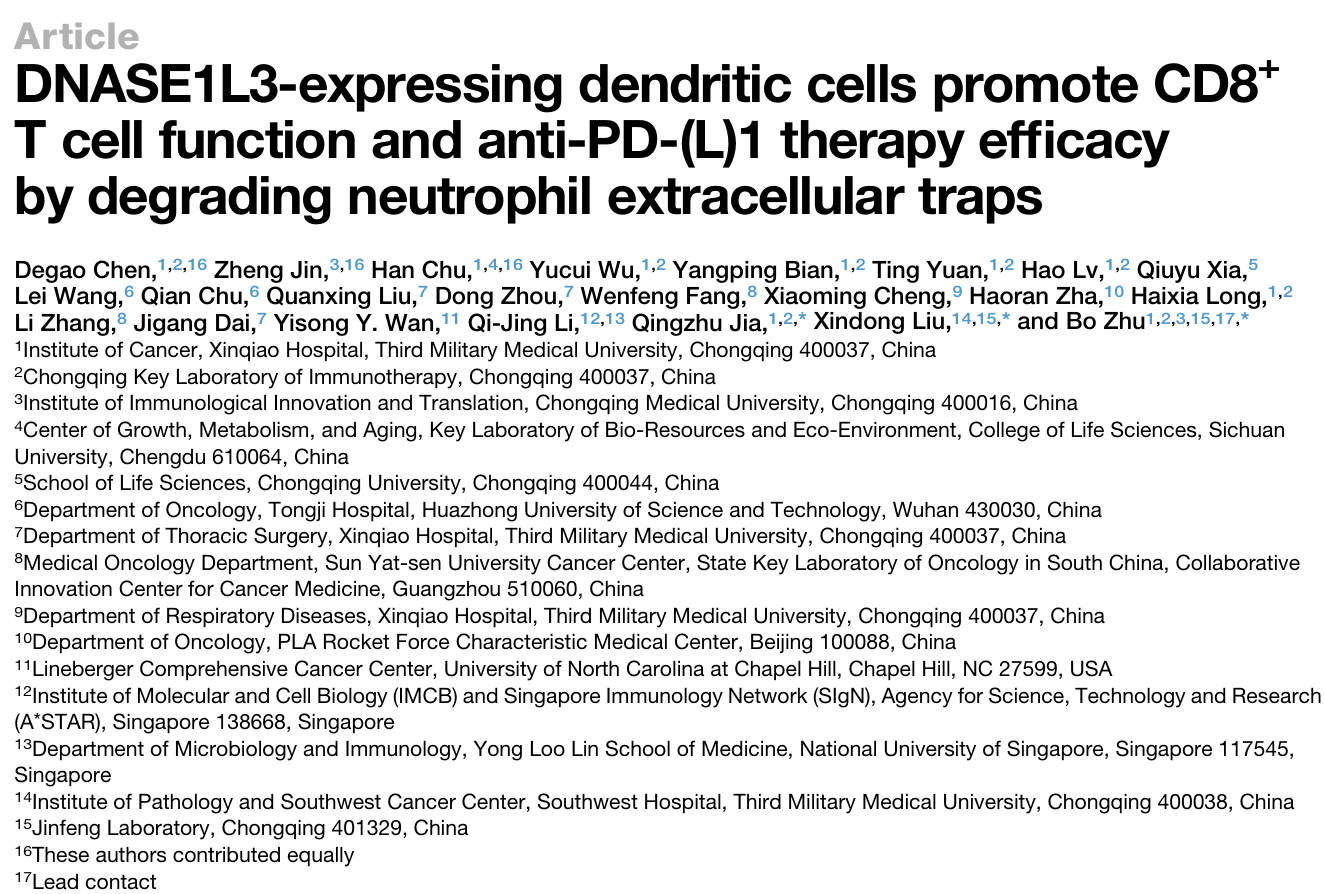
第三军医大学新桥医院肿瘤研究所
Summary
CD8+ T cell exclusion and dysfunction in the tumor microenvironment (TME) are among the most challenging obstacles for anti-PD-(L)1 therapy. Here, we report that tumor-infiltrating dendritic cell (DC)-specific expression of the deoxyribonuclease, DNASE1L3, is positively correlated with favorable outcomes of anti-PD-(L)1 treatment in cancer patients. DNASE1L3 conditional knockout in DCs leads to enhanced tumor growth and diminishes anti-PD-L1 therapeutic efficacy by impairing infiltration and effector functions of CD8+ T cells. Conversely, injection with DNASE1L3 promotes CD8+ T cell infiltration and reduces exhaustion in the TME, significantly retarding tumor growth and enhancing anti-PD-L1 response. DNASE1L3+ DCs can degrade neutrophil extracellular traps that suppress the spatial distribution of CD8+ T cells in tumors, enabling establishment of cytotoxic CD8+ T cell hubs in human cancers. Our findings reveal a role of DC in regulating intratumoral CD8+ T cells and identify DNASE1L3 as a promising target to improve anti-PD-(L)1 therapy.
摘要
肿瘤微环境中CD8+ T细胞的浸润排斥与功能失调是抗PD-(L)1疗法面临的核心挑战。该研究发现,肿瘤浸润树突状细胞(DC)特异性表达脱氧核糖核酸酶 DNASE1L3 与癌症患者抗 PD-(L)1 疗效呈正相关。在 DC 中条件性敲除DNASE1L3会削弱 CD8⁺ T 细胞的浸润与效应功能,从而加速肿瘤生长并降低抗 PD-L1 疗效;相反,外源给予 DNASE1L3 可促进 CD8⁺ T 细胞浸润、减少其耗竭,显著抑制肿瘤并增强抗 PD-L1 反应。DNASE1L3⁺ DC 能够降解阻碍 CD8⁺ T 细胞空间分布的中性粒细胞胞外诱捕网(NET),在人类肿瘤中形成细胞毒性 CD8⁺ T 细胞“枢纽”。结果揭示了 DC 调控瘤内 CD8⁺ T 细胞的新机制,并证实 DNASE1L3 是提升抗 PD-(L)1 疗效的潜在靶点。

汇报人:周菁
导师:何璇
审核:夏轶君、任建君